

Prisms at the Tip of a Spoon
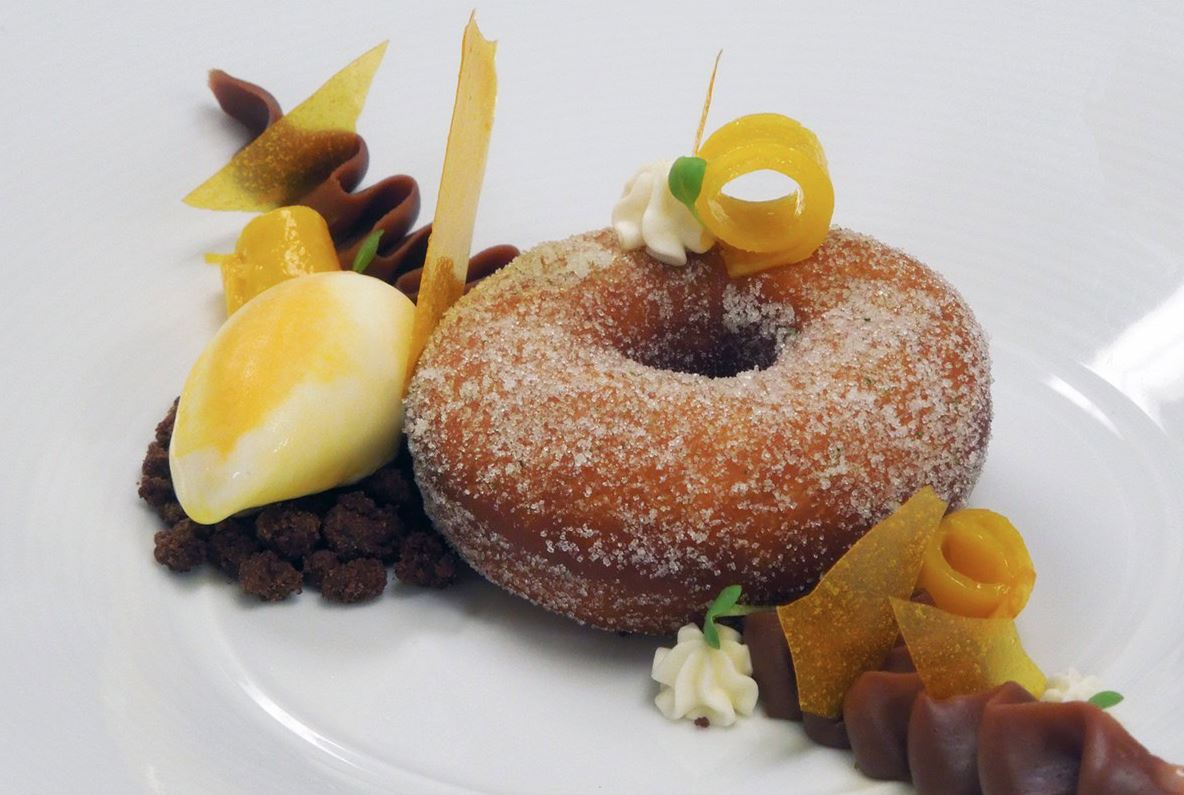
Why tiny sucrose lattices bend brightness and cradle flavor in every crystalline spark
Crystals That Rise From Quiet Syrup
A pot of warm syrup looks like a calm mirror, yet inside that calm, invisible patterns begin to assemble. Sucrose molecules drift, meet, and align along subtle orientations that repeat in space, forming a lattice that grows face by face. The first seed may be a speck of dust, a sugar grain, or a deliberate crystal tied to a thread. Once a template appears, neighbors fall into place with orderly patience, and the liquid loses freedom as a solid map expands. Confectioners guide this growth with temperature, concentration, and agitation, since each variable shifts the moment when molecules choose order over randomness. The result is a solid that still remembers the fluid it came from, a memory written as planes and edges that catch light like a tiny hall of mirrors.
The speed of growth writes texture into the crystal. Rapid cooling invites many nuclei that crowd one another, leading to small crystals with a soft and quick dissolve, while slow and steady cooling favors fewer nuclei and larger facets with sparkle and crunch. The artisan chooses a path based on the experience they want to gift, then nudges the syrup toward that destination with exacting calm.
How Brightness Enters a Candy Jar
Light behaves like a visitor that changes step at every boundary. When it touches the surface of a sugar crystal, part of the beam reflects outward and part slips inside, bending as it passes from air into dense solid. Within the lattice, light meets planes that tilt at precise angles, so rays bounce, scatter, and sometimes split before escaping. Multiple internal reflections create flashes that feel lively, a glitter that signals crispness long before the first bite. In finely grained confections, countless micro faces soften the sparkle and replace it with a gentle glow, which the eye reads as tenderness. The same chemistry that decides texture therefore curates the visual story on the plate.
Clarity also depends on uniformity. Fewer defects and tighter packing lower haze and sharpen reflections, while trapped microbubbles and stray proteins scatter light into a cloud. This is why a clear pulled sugar ribbon shines like glass and a fudgy interior looks matte, both born from the same ingredient yet shaped by different histories of order.
Planes Edges and the Taste of Shape
Mouthfeel begins at the boundary between tongue and crystal face. Large facets fracture into shards that sound crisp and then dissolve slowly, releasing sweetness at a measured pace. Tiny crystals behave like velvet, they surrender quickly and bathe the palate with a rapid bloom of flavor. Surface area controls the rate of dissolution, and that rate shapes perception. A slow dissolve lets aromas rise in waves, while a fast dissolve delivers brightness that finishes clean. Textural memory forms from these mechanics, which is why rock candy feels playful and fondant feels comforting even when the recipe contains the same sucrose.
Edges matter as much as size. Sharp edges scratch air pockets into the bite and amplify crunch, rounded edges glide and feel gentle. With practice, a confectioner sculpts edges as surely as a jeweler shapes gems, not with chisels but with temperature curves, agitation, and patient rest.
The Quiet Work of Water
Water controls when and how crystals appear, and it keeps working even after the candy cools. During boiling, water leaves in a steady stream, raising concentration until the syrup becomes supersaturated, a state that begs for order. After formation, ambient humidity tries to return, sneaking through the surface and softening edges, which shifts shine toward haze and crunch toward chew. Hygroscopic sugars like fructose invite even more moisture, so formulas that include invert syrup resist dryness but risk stickiness in humid air. Storage therefore becomes part of design, since the crystal and the room negotiate every day.
Because water is a sculptor, careful makers weigh and measure with vigilance. A difference of a few grams or a slight change in room humidity can tilt the balance, so tools like thermometers and sealed containers become quiet guardians of texture and luster.
Seeding and the Birth of Order
Crystallization begins sooner and more predictably when a seed offers a path. Rock candy strings show this truth simply, the thread presents edges that invite the first layers to land, and a forest of prisms sprouts along its length. In fondant work, fine sugar is kneaded into warm syrup to multiply seeds, which forces countless small crystals to form at once. The kneading cools the mass and distributes nuclei evenly, so the result turns creamy rather than granular. Seeding is choreography, a way of telling wandering molecules where to stand and how to face the light.
Without a seed, a supersaturated syrup may stay clear for hours, holding its breath until the smallest disturbance triggers a rush. Then crystals storm across the liquid like frost on glass, beautiful yet often unplanned. The artist chooses between patience and provocation depending on the candy they envision.
Interfering Agents That Protect Smoothness
Additions like glucose syrup, honey, or acid that produces invert sugars interrupt the neat stacking of sucrose. These smaller or differently shaped molecules slide between neighbors and prevent long orderly runs, which keeps crystals tiny and textures soft. Fudge, caramels, and smooth centers rely on this controlled disorder to stay creamy for days. Interfering agents do not fight crystals, they teach them to stay humble, which protects sheen and prevents coarse bite.
The balance is delicate. Too little interference and large crystals dominate, too much and structure collapses into stickiness. Skilled confectioners set a narrow lane where sweetness remains clean, shine stays gentle, and the bite relaxes into velvet.
Polarized Light and Hidden Patterns
Under polarized light, sugar crystals reveal vivid patterns that the naked eye cannot see. The lattice rotates the plane of light in ways that depend on thickness and orientation, so colors flare across the crystal like living stained glass. While this spectacle belongs to the classroom more than the kitchen, the insight travels back to the bench. It confirms that alignment and uniformity are not abstract ideas but physical realities that shape luster, refraction, and even the way cracks propagate during a bite. The candy that glitters cleanly often carries a well aligned interior, and the confection that looks hazy often hides disorder at small scales.
Observation becomes a habit. Even without special optics, a maker can read clues from shine, color depth, and the feel of a cooling slab. The eye learns to see patterns and the hand learns to verify them.
From Glassy Sheets to Faceted Cities
Sugar can cool into an amorphous solid without visible crystals when the syrup is quenched and held below the temperature where molecules can shuffle into place. This glassy state looks clear and feels snappy, which suits pulled sugar, windows for gingerbread structures, and translucent decorations that borrow light like water. Hold the same material near warmth and time for long enough, and crystals begin to appear inside the glass, a slow return from chaos to order. The transformation changes clarity and taste release, which is why storage rules separate glassy candy from crystalline candy.
Choosing between glass and crystal is not a matter of better or worse. It is a palette decision, much like choosing matte or gloss in paint, each amplifies light and flavor in a different voice.
Flavor Capture on Crystal Faces
Aroma molecules carry shapes and charges that respond to surfaces. Freshly formed sugar crystals present clean faces that can host volatile compounds through weak attractions. This gentle adsorption holds delicate flavors near the surface, then releases them as the crystal dissolves. The effect can amplify citrus oils, roasted notes from caramel, or floral tones from infusions. Texture and flavor therefore partner through surface chemistry, which is why a brittle shard with large facets can deliver layered aroma bursts at a slower pace than a fine fondant that releases everything at once.
The liquid between crystals also matters. In some confections a thin syrup fills the gaps and acts as a carrier that slides flavors across the tongue. Makers can tune this interstitial syrup by adjusting solids, acids, and invert levels, which shifts how quickly aroma rises and how long sweetness lingers.
Color That Appears Without Pigment
Not all color in sugar work comes from dye or fruit. Thin sheets show interference colors when light waves reflect from both surfaces and overlap, so a pulled ribbon can blush with faint iridescence even when it is clear. Faceted clusters can glow with warm depth because edges scatter light into the red side as paths grow longer. Caramelization creates true pigments at higher temperatures, yet before that point, thickness and surface polish already paint with light alone. Thoughtful shaping can therefore coax visual drama without changing the recipe.
When colorants are used, the crystal network turns into a gallery. Transparent pieces invite light to roam and return with brilliance, opaque pieces tame glare and focus attention on form. The artist chooses the stage, then lets optics perform.
Temperature Maps That Tell the Future
Boiling syrup forms zones with slightly different temperatures depending on pot geometry and stirring pattern. These micro maps influence concentration, and concentration decides where crystals will appear first. A wide shallow pan promotes even evaporation and gentle gradients, which favors predictable growth, while a deep narrow pot holds heat at the core and may delay uniformity. Professional candy makers learn to level these maps with careful stirring and controlled heat, then they rest the syrup so bubbles settle and surfaces polish before seeding.
Thermometers translate these invisible landscapes into numbers, but experience translates them into timing. Both tools collaborate to produce light that sparkles and flavor that arrives with grace.
Impurities as Anchors and Accents
Traces of minerals or proteins can serve as anchors for early crystals, or they can scatter light and mute shine depending on size and distribution. Sometimes a small amount of cocoa, nut dust, or spice acts like a purposeful impurity that adds flavor while moderating crystal growth. At other times stray particles introduce grit and dullness. Straining, skimming, and using clean tools protect clarity, while selective inclusion of flavorful fines creates character. The difference lies in intention and in the scale of the particles.
When clarity is the goal, the cleanest syrup wins. When character is the goal, a carefully chosen cloud can be beautiful.
The Music of Fracture
That first snap carries information about structure. A high crisp note suggests large coherent domains that release energy quickly, a softer sound hints at small crystals or internal syrup that cushions the break. Bakers and candy makers listen to this music during tests. Cooling sheets are tapped, shards are bent, and the sound joins shine and aroma as signals that the process went right. The tongue confirms the message a moment later, since fracture sets the pace for dissolution and the rhythm of release.
The ear therefore becomes a quiet instrument in the workshop, another way to measure the dance between light and flavor inside a crystal city.
Fondant Clouds and Velvet Light
Fondant owes its creamy body to a blizzard of minute crystals suspended in thick syrup. Makers cook a clean syrup, cool it without disturbance, then beat it until millions of tiny sites appear at once. The mass turns opaque as light scatters softly through the population of crystals, and the mouth reads this as smoothness. When flavored with chocolate, mint, or fruit essences, the tiny faces hold and release aroma gently, which suits fillings and icings that need quiet elegance rather than glitter.
Storage keeps those crystals small. Warmth can allow growth and grain, so cool sealed conditions protect both luster and texture for service.
Rock Candy as a Slow Laboratory
The simplicity of rock candy hides a complete lesson in crystal science. A string dipped into concentrated syrup and hung in a jar becomes a skyline over a week, each point a textbook example of face development and light play. Children and professionals share this wonder, since the method scales from kitchen to studio without losing clarity. Add fragrant herbs to the jar, and aroma molecules will mingle with the growing lattice, proving that flavor can join the architecture rather than simply coat it.
By changing temperature cycles across days, one can also sculpt habit, the preferred shape of the crystal. Cooler nights and warmer days favor longer faces or thicker columns, so the jar becomes a tiny climate with creative power.
Chocolate Meets Sugar in Textural Harmony
In chocolate work, sugar crystal size guides snap, melt, and sheen. Fine crystals dissolve into cocoa butter quickly and leave a silky finish, while coarse crystals interrupt flow and create sandy notes. Conching reduces crystal size and coats each grain with fat, which smooths both light and flavor. When the bar sets, tempered cocoa butter forms its own crystalline network that partners with sugar faces, and together they decide how the surface reflects and how the bite begins.
This duet between fat crystals and sugar crystals shows that structure loves partnership. The best textures emerge when both networks are tuned to the same song.
Designing for Climate and Time
Humidity, warmth, and movement after cooling continue to edit the candy. Makers design recipes that match the destination, with higher interference and tighter wraps for tropical weather, and leaner formulas for dry rooms where crystals stay crisp. Silica gel or sealed tins protect shine on journeys and at events. When a display must last, artists favor glassy pieces with low moisture pick up, and when a dessert must melt at the first sip of coffee, they choose tiny crystals and soft syrups.
Longevity is therefore a creative choice, not just a logistical one, and the best designs taste alive on the first day while still charming on the third.
Sourcing Sweetness With Care
Cane and beet produce sucrose that behaves similarly in most candy work, yet trace minerals and byproducts can shift color, aroma, and rate of inversion under heat. Unrefined sugars carry caramel tones that deepen flavor but increase haze, while refined crystals offer pristine optics and predictable behavior. Choosing one or blending both allows a maker to tune the balance between brilliance and warmth. Ethics join science here, since fair trade sources and responsible farming shape the story behind the sparkle.
Great candy shines twice, once in the light and once in the conscience of the person who made it.
A Last Glint Before the Bite
Hold a shard of candy to the window and a small universe appears, a meeting of order, light, and aroma that began with water and patience. The lattice guides brightness into flashes that promise crunch, the faces carry scent that blooms as the crystal dissolves, and the memory of syrup lingers as sweetness that feels complete rather than loud. Every choice along the way wrote a line in this universe, from seed to stir to storage, and the final bite reads those lines out loud. In that moment the science of crystals and the art of taste become a single experience, brief yet brilliant, and perfectly at home at a table where wonder is welcome.