

Layers That Breathe at Dawn
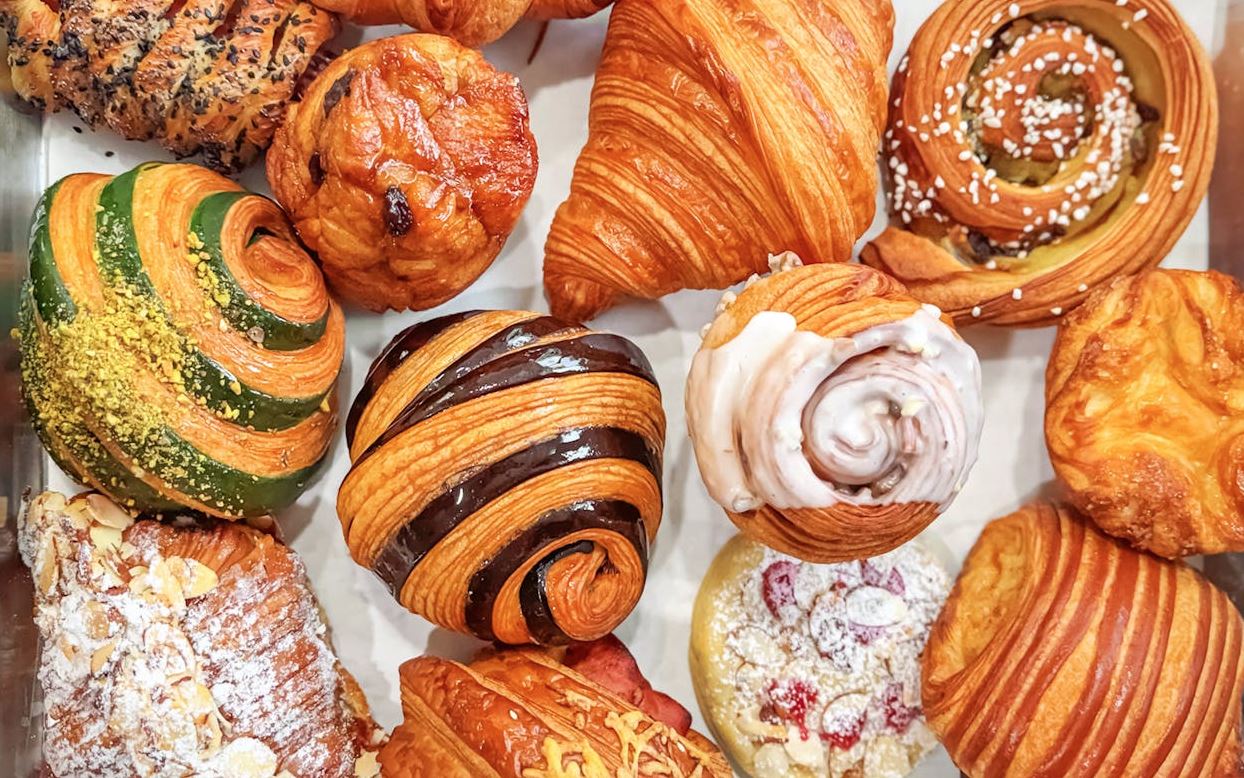
A practical science guide to lamination fermentation and oven spring in croissants
What Flakiness Really Means
Flakiness is not magic, it is physics in a breakfast coat, a stack of dough sheets separated by fat films that melt and release steam which lifts and dries the dough into crisp leaves, so the pastry cracks with a gentle whisper rather than a hard snap, and each bite alternates airy honeycomb and buttery crumb without greasiness.
The goal is separation with tenderness, which arrives when gluten gives stretch without fighting, when butter stays as a sheet and not a smear, and when steam arrives faster than the dough can seal itself, everything else in a croissant formula exists to support that moment of lift and set.
Flour Strength and Extensibility
Flour decides whether the dough can stretch thin without tearing, and whether it will shrink after rolling, so a medium protein flour builds a network that holds gas but still accepts folds, while very strong flour pulls the layers tight and resists shaping, and very soft flour tears and loses definition, which both lead to weak flake and uneven crumb.
Autolyse helps hydration and alignment, a short rest after mixing flour and water allows gluten strands to untangle and elongate, then later mixing requires less time and generates less heat, so the dough stays cool and calm and easier to laminate.
Hydration and Dough Temperature
Water content sets dough feel, higher hydration gives open honeycomb but complicates handling, lower hydration keeps edges sharp but can limit lift, so a balanced range keeps the dough supple while still firm enough to resist butter slippage, and the final dough temperature lands cool to protect later steps.
Temperature is a silent ingredient, if the dough warms too early, yeast races and the butter softens, if the dough chills too hard, layers crack during rolling, so aim for a dough that leaves the mixer cool to the touch, ready for a relaxed rest that smooths the surface without waking the butter waiting to arrive.
Yeast Activity and Flavor Pathways
Yeast brings gas for structure and acids for taste, and time decides which voice leads, a slow bulk at cool room temperature or a long chill in the refrigerator builds aroma that reads as clean wheat with a light dairy note, while a rush gives lift without depth, and the crumb tastes flat even when the shape looks correct.
Preferments add complexity, a poolish or a tiny portion of old dough nudges the final flavor toward nutty and full, which pairs well with butter, and the acids they deliver strengthen gluten enough to hold big holes without collapse, so the crumb stands tall after baking instead of sinking as it cools.
Salt Sugar and Milk
Salt tightens gluten and moderates yeast, sugar feeds browning and softens dryness, milk powder adds lactose for color and milk proteins for tenderness, yet each must sit in balance or the dough turns stiff or sluggish, so small amounts carry large influence, and restraint protects the layers from stickiness and slump.
A touch of sugar is plenty, since butter will supply flavor and richness, and too much sugar draws water and glues sheets together, which blocks flake, while a modest dose of milk powder deepens color without turning the crust thick or tough.
Butter Plasticity and Water Inside Fat
Butter is the moving wall between sheets, and it must bend like clay without cracking or melting, which depends on crystal state inside the fat, so gentle work and correct temperature place butter in a plastic zone where it thins evenly and stays in its lane under the pin or the sheeter.
Water in butter matters because that water becomes steam during bake, lifting layers from within while the melting fat fries the edges, so European style butter with higher fat and lower water gives control and flavor, yet even standard butter can succeed if the handling stays cool and the lamination neat.
Preparing the Butter Block
Shape matters as much as temperature, a butter block that matches the size and aspect of the dough book spreads with minimal stress and stays even at the corners, while a lumpy or narrow block creates thick spots that blow out and thin spots that vanish, both of which show later as patchy crumb or leaks.
Light taps with the pin align crystals and flatten edges, then a brief chill resets firmness, and the block should bend at the corners without cracking and should not shine or smear, a sign that it sits in the sweet window for the lock in to come.
Detrempe Meets Beurrage
The first meeting of dough and butter sets the tone for the entire bake, fold the dough over the butter like a sealed book with clean edges, no trapped flour, and no air pockets, then press gently to bond, the goal is contact without compression, so layers move together without squeezing fat into the crumb.
If the dough is softer than the butter, the butter shatters into flakes and later streaks, if the butter is softer than the dough, it squirts forward and pools at the ends, so match firmness before you close the book and you will control every fold that follows.
Turns Geometry and Layer Multiplication
Every turn multiplies layers, and the shape you choose decides the final count, a simple three fold repeated three times builds many leaves without making them too thin to survive proof, while a mix of three and four folds can fine tune the count for a particular flour or climate, and a gentle touch keeps edges square so layers stay parallel.
After each turn the dough needs a rest to let gluten relax and to let heat drift out, then the next pass stretches rather than fights, which preserves the butter sheet and the alignment that you worked to create, and alignment is the map that the oven follows when it gives the pastry height.
Resting as a Structural Tool
Time between passes is not delay, it is repair, it heals micro tears and returns elasticity without spring back, and it allows temperature to reset so butter does not smear on the next roll, short rests on the bench and longer rests in the refrigerator keep the project on track.
Rushing shows later as uneven layers and tight bands inside the crumb, while patient pacing gives even lift and smooth walls around the holes, and that evenness reads as professional even before the first bite reaches the table.
Sheeting Thickness and Stress Control
The rolling step decides how thin each leaf becomes and how the dough distributes stress, so reduce thickness in modest steps, dust with as little flour as possible, and brush away excess before folding, extra dry flour between layers weakens bonding and turns into gray streaks after baking.
Warm edges stretch sooner than cool centers, so rotate the piece often and favor the cool zones with gentle pressure, you will finish with a rectangle that holds corners and stacks neatly, which matters later when triangles must be even so the curl rises symmetrically.
Triangle Geometry and Tension
Shaping builds a spring inside each pastry, long triangles create more wraps and more interior tension, short triangles create stout rolls with fewer coils, and the small slit at the base lets the ends open and tuck without tearing, which keeps the point centered as the pastry swells.
Do not compress while rolling, let the dough grip itself with light tension, and keep the point under the pastry so it does not lift during bake, then curves appear naturally rather than by force and the layered crescent looks calm on the tray.
Proofing Clues That Matter
Proper proof feels like a soft wobble when you nudge the tray, layers look humid and slightly swollen, and the pastry smells of sweet dairy and a hint of fermentation, while under proof shows tight seams and strong bounce, and over proof shows weak surface and heavy butter marks on the paper after baking.
Temperature and humidity control the rise, warm and moist air helps yeast while protecting the skin from drying, and cool proof builds flavor when time permits, yet always keep the butter below its slump point or the stack will fuse before it ever reaches the oven.
Oven Spring Steam and Separation
Heat delivers three actions at once, gas expands in the dough, water in butter and dough flashes to steam that pries leaves apart, and fat melts to coat and fry the separating sheets, so the first minutes decide the final height and the crisp edge that sings when you break the crust.
A strong initial heat gives push, a stable mid bake sets structure, and good airflow dries the surface so layers do not weld back together, trays should be spaced for circulation, and a preheated stone or heavy steel under the rack adds energy that locks the shape before the butter can seep.
Color Development and Aroma Layers
As the pastry dries, sugars caramelize and milk solids brown, which builds the spectrum from straw to gold to amber, and each step adds notes that move from fresh butter to toasted nut and warm toffee, color is flavor you can see, and it hints at the crispness inside.
An egg wash with a little milk increases shine and color, but use a thin coat so wash does not drip into seams and glue leaves together, and avoid pooling at the tips which can burn faster than the rest of the surface.
Cooling and Crumb Setting
Once out of the oven the pastry continues to change, steam escapes, fat sets, and starch firms, so a rack prevents soggy bottoms and keeps the shell crisp, while stacking hot pastries traps moisture and dulls the leaf, patience for ten minutes rewards the eater with clean bite and gentle flake that does not shatter into dust.
Serve warm rather than hot for peak aroma and texture, the butter will bloom and the crumb will hold shape, and the sound of the crust will say more about your process than any words can tell.
Climate Strategies for Every Kitchen
Warm rooms ask for cooler dough and shorter bench rests, colder rooms ask for butter that is slightly softer and longer bench time, and very dry air benefits from covered rests that prevent a skin, which would later crack into faults during rolling, so adapt pace to the day rather than forcing a fixed schedule.
In humid weather consider butter with higher fat and avoid long proofs outside controlled space, while in cold seasons guard against over hard butter that will fracture, a small adjustment in starting temperature often saves an hour of frustration later.
Troubleshooting from Leak to Dense
Butter pools on the tray when layers tear or butter melts before set, usually from warm dough or aggressive rolling, solve by cooling longer between turns and sealing edges with care, and bake on a well preheated surface to set the base fast. Grease stains across the crumb point to butter too soft during lamination or to excess pressure near the center during rolling.
A tight crumb with small holes comes from under proof or from too many layers that ended too thin, while wide tunnels under a roof come from over proof or from butter that shattered into flakes during lock in, compare your process notes to the crumb and you will see the cause in the pattern of the holes.
Whole Grain Variations and Enrichment
Whole grain flour raises flavor and nutrition but adds bran that can cut gluten strands, so sift a portion or soak the flour to soften edges, increase hydration slightly, and reduce the number of turns to avoid paper thin leaves that tear, the result will be hearty yet still layered with a gentle crisp shell.
Alternative fats change plasticity and melt profile, cultured butter adds aroma with similar handling, clarified butter removes milk solids and reduces browning, while plant fats vary widely, some stay too firm at cool temperatures and crack layers, others melt too soon, so small test batches map the right window before a full run.
Food Safety and Keeping Quality
Butter rich pastry stores best at cool room temperature on the day of baking, then freezes well as shaped unproofed pieces that can proof later for fresh service, and baked croissants can be refreshed in a moderate oven to crisp the shell and revive aroma, but refrigeration tends to stale the crumb faster due to starch behavior at low temperatures.
Clean benches and cool hands prevent smearing that traps pockets where spoilage could begin if stored warm and wrapped, and trays should be fully cooled before packing to avoid condensation that softens layers and invites loss of crunch.
Repeatability Through Measurement
Consistency grows when numbers join instinct, weigh ingredients, note dough temperature off the mixer, record butter feel at every lock and turn, and track proof time and room conditions, then compare with crumb photos, sound of crust, and weight loss during bake, small changes in process will show up as clear changes in texture and height.
With a log in hand you can tune the schedule to your tools and climate, and soon the path to a tall even honeycomb will feel simple because it is documented, not because it is easy, and the craft will start to look like second nature.
A Morning Lesson Wrapped in Layers
A great croissant carries the memory of careful mixing cool hands measured turns and patient proof, then the oven writes the final line as steam lifts and light pours through the crumb, and when the crust sings while you break it the science and the care have met in a single sound, a reminder that breakfast can be both study and joy in the same warm bite.